Manchester Business and Property Courts Forum Cryptocurrency Litigation Seminar series event with the Chancellor on 21 June 2026
The Forum:
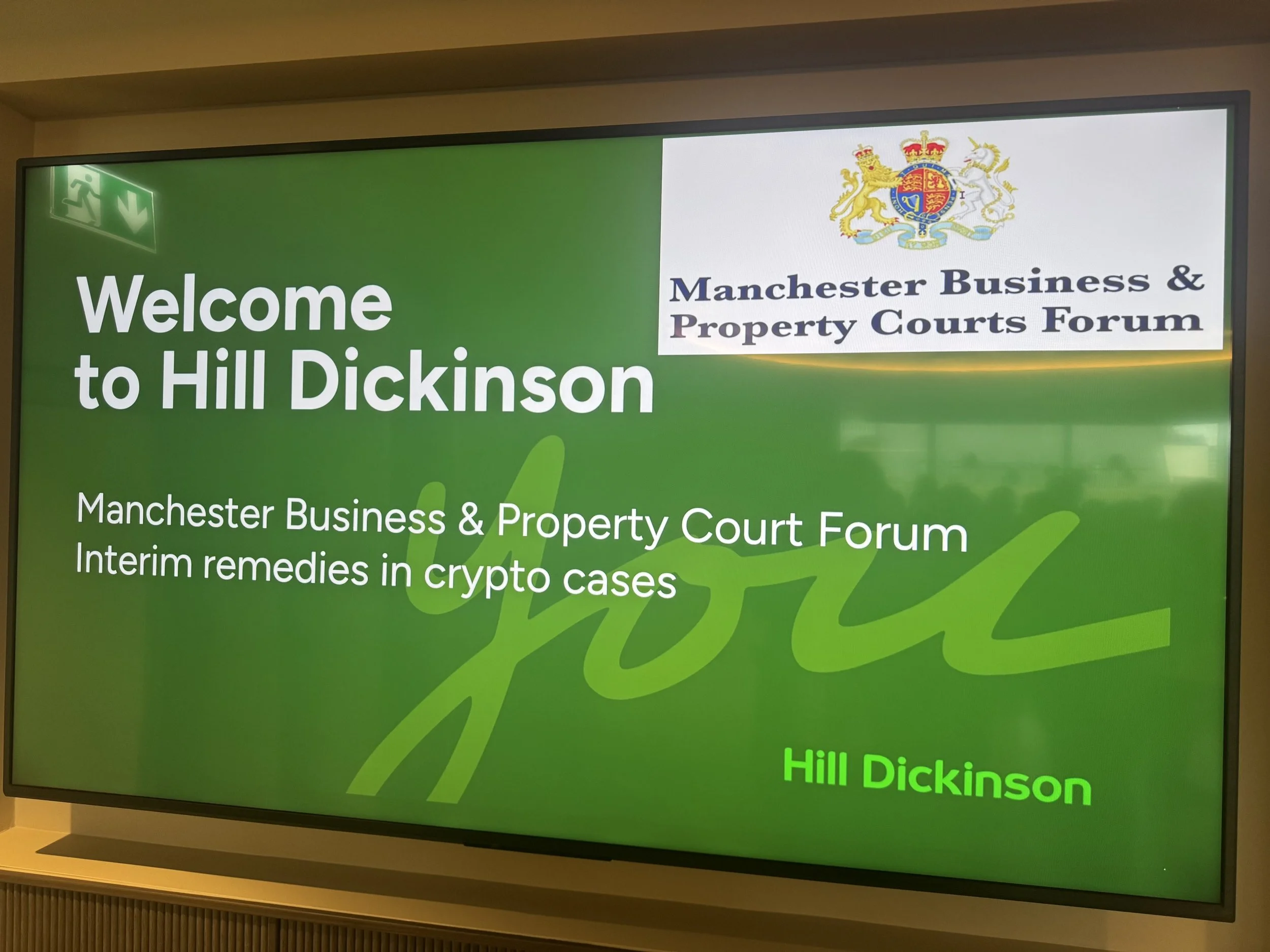
The Manchester Business and Property Courts Forum (“the MBPC Forum”) was established in 2020. It brings together judges, legal practitioners, academics and other professionals from the Manchester legal and business community to provide regular seminars and lectures relevant to the work of Business and Property Courts.
The aims of the Forum include promoting the specialist jurisdictions offered by the Business and Property Courts in Manchester and spreading awareness of the Business and Property Courts to actual and prospective court users, including amongst law students and academics.
Cryptocurrency Litigation in 2026:
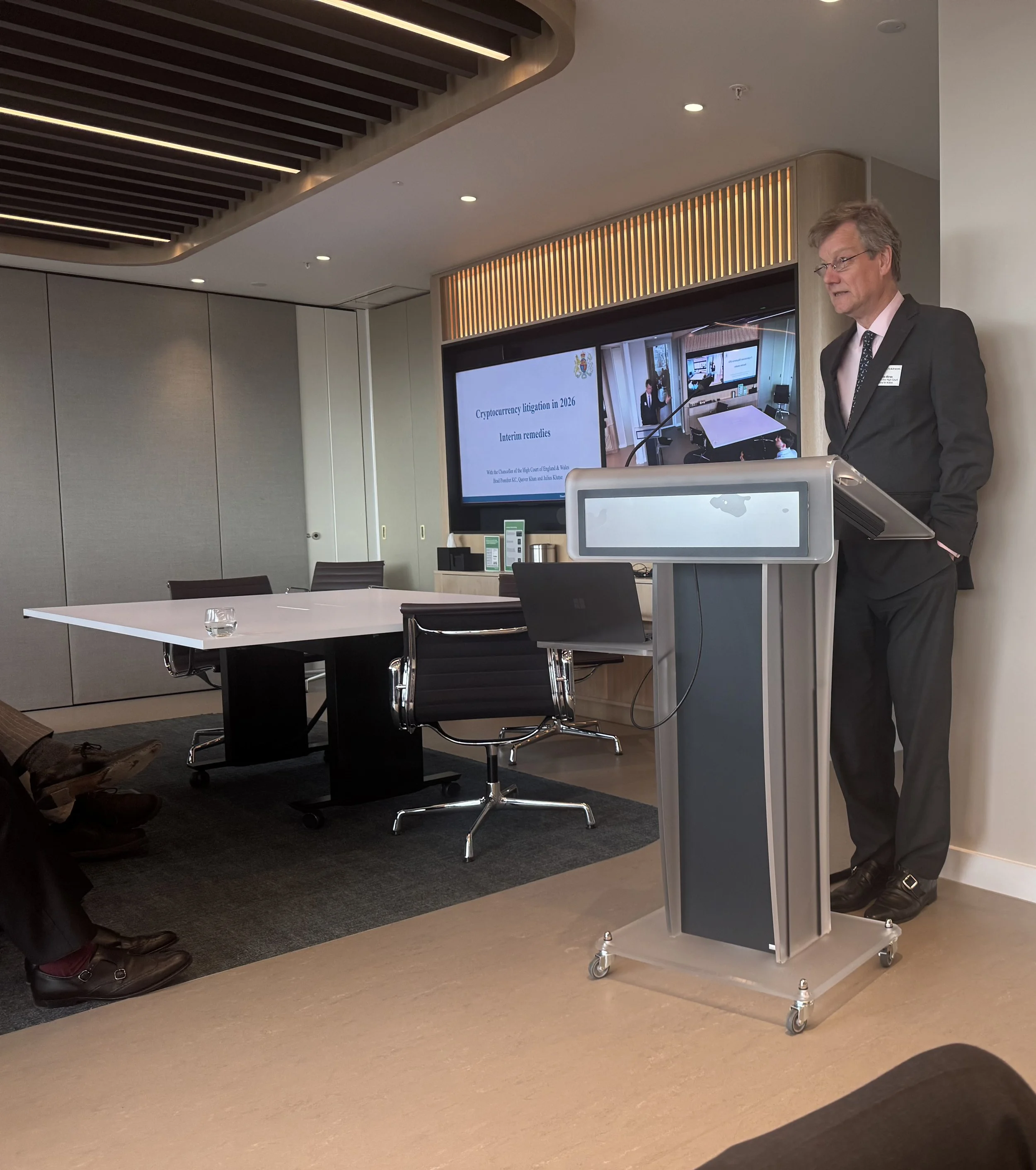
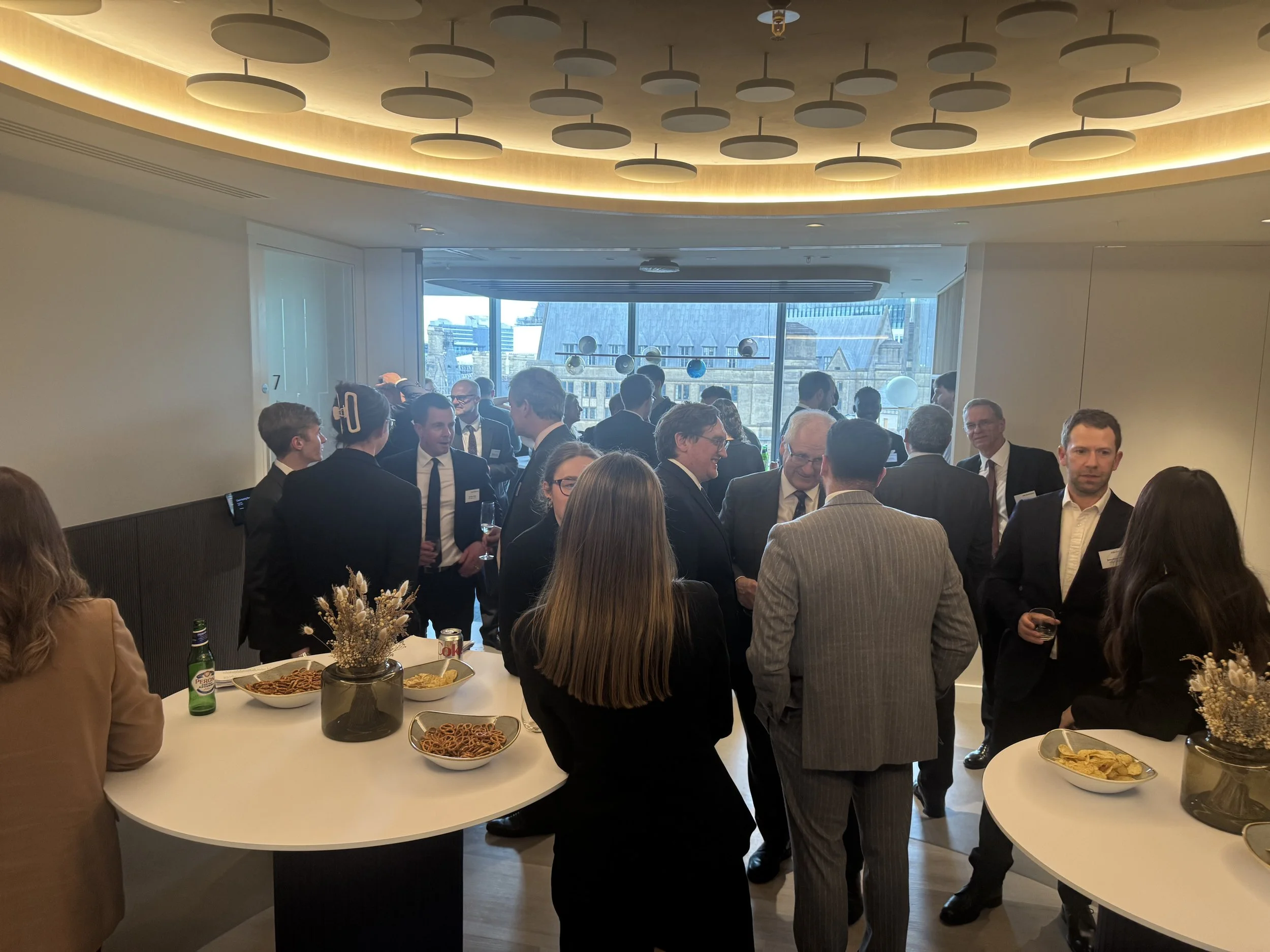
On 21 May 2026, the MBPC Forum, generously hosted by Hill Dickinson LLP, held the second of three seminars on Cryptocurrency Litigation in 2026, focusing on interim remedies in cryptocurrency cases. The MBPC Forum was delighted to be joined by the Chancellor of the High Court of England and Wales, the Right Honourable Sir Colin Birss.
Introduced by HHJ Richard Pearce, the Judge in charge of the Circuit Commercial Court in Manchester and the acting Designated Civil Judge, the Chancellor delivered an insightful talk focusing on the interaction between cryptocurrency and existing interim remedies.
The Chancellor began by reflecting generally on the technological development that has occurred within the law over time and where we are today, noting how it would be impossible to maintain a legal practice without access to a computer or the internet, the internet being, in his words, “ubiquitous”. Despite the current prevalence of artificial intelligence (“AI”) and cryptography as what appear to be a new issues, the Chancellor said that a number of individuals, such as Professor Susskind and David Chaum, were thinking about these things years ago. He further commented that the law has been dealing with issues such as natural language processing, primitive electronic home banking and the use of cryptographic techniques to create forms of electronic cash, for quite some time.
1 The Chancellor said that whilst AI is not new, its more recent use since the birth of ChapGPT has certainly created new questions. He then referred to the AI Guidance for the judiciary and noted that the Civil Justice Council are working on their response to a consultation concerning the use of AI by legal professionals in preparing court documents. The Chancellor alluded to two situations relating to court documents: first, would a legal professional who has signed off a pleading with their own name, be required to disclose their use of AI if, by signing it, they have taken personal responsibility for the contents? Secondly, is the same approach to be taken regarding the use of AI in drafting witness statements? We await the response to the consultation on this.
With the current pace and nature of development, it was strongly suggested by the Chancellor that legal training will need to adapt to match, in order to better equip those who are entering the profession.
And then, said the Chancellor, there is cryptocurrency, the subject matter of an increasing number of cases in the Business and Property Courts.
Freezing Orders:
With the generalities of cryptocurrency having been covered in the first of the three seminars, the Chancellor focused immediately on its interaction with interim remedies, diving straight into Freezing Orders, namely Mareva Injunctions and Proprietary Injunctions.
The first and the key question, the Chancellor suggested, is whether cryptocurrency is considered property. Applying the test in National Provincial Bank v Ainsworth [1965] 1 AC 65, as well as the Court of Appeal’s decision in Tulip Trading Ltd v Van der Laan [2023] EWCA Civ 83 (a case in which the Chancellor himself delivered the leading judgment), it appears that cryptocurrency is indeed rivalrous and capable of assumption by third parties.
As to English law’s classification of property as a thing in possession or thing in action, this potential stumbling block has been addressed by a new statute, The Property (Digital Assets) Act 2025, which provides that “something is not prevented from being property simply because it is neither a thing in possession nor a thing in action”.
The Chancellor suggested that this allows for the conclusion that cryptocurrency is indeed property.
Service:
Taking a practical approach, the next question for the Chancellor concerned what else Claimants need in these cases, namely information, in which case the appropriate interim remedies are Norwich Pharmacal Orders and Bankers Trust Orders that require third party disclosure.
Another pertinent issue with these interim remedies is service, with the Chancellor commenting that the people from whom information is sought are often outside the jurisdiction and therefore permission is required to serve. Permission to serve is governed by the gateways contained in Practice Direction 6B, with gateway 25 having been added specifically with regard to problems arising from cryptocurrency.
The Chancellor highlighted the important caveat within paragraph 25 of the Practice Direction, namely that the application was “for the purpose of proceedings already commenced or which… are intended to be commenced” in England and Wales, which he noted may seem limiting. However, the alternative might lead to a risk that the courts of England and Wales was seen as a ‘world police officer’, effecting service out of the jurisdiction for proceedings also being commenced outside of the jurisdiction.
The Chancellor concluded his speech by repeating the implications that these issues, and the consequent developments, may have for legal training. He emphasised that they should be borne in mind and practitioners should ask themselves how to best equip the new generations of lawyers for the issues that they will face in their future practices.
Sachs v Snape and Others:
Following the Chancellor’s speech, there was a mock application based on the case of Sachs v Snape and Others [2025] EWHC 1746 (Comm), in which the Chancellor played the part of the judge. Brad Pomfret KC of 23ES Chambers, who acted for the Claimant in the original case, introduced the case to the mock court, before giving way to Qasver Khan of 23ES Chambers and Julius Klutse of Exchange Chambers who shared the role of junior counsel for the Mock Applicant and proceeded to apply for both a Freezing/ Mareva Injunction and Proprietary Injunction.
3 The mock application was an opportunity for the audience to see the principles that the Chancellor had addressed during his speech, in practice, as the Applicants covered the preliminary issue of why the hearing should be heard ex parte and in private; the tests for both a Freezing Injunction and Proprietary Injunction in the context of cryptocurrency; the issue of service in a multi-jurisdictional case and amendments to the model orders.
On the facts of Sachs v Snape and Others [2025] EWHC 1746 (Comm), the Claimant and First Defendant had entered into an agreement whereby the Defendant was to invest the Claimant’s money into Cryptocurrency. Over time it appeared that the Defendant was either unable or unwilling to repay the Claimant and therefore the Claimant considered himself to have been the subject of fraud, and that he had a proprietary right to monies that had been taken from him or given by him to the Defendants for the specific purpose of investment.
Some of the pertinent issues that arose from the Chancellor’s questioning as the judge, was why the hearing needed to be without notice and in private. The Applicants submitted that there was a clear risk of dissipation of the assets if the Defendants were made aware of the application, given the fraudulent nature of the case and the causes of action.
Further, there was the issue of effective service out of the jurisdiction onto “Persons Unknown”, the Fifth Defendant, especially if these individuals and/ or companies were resident in or incorporated in other jurisdictions. The Applicants referred in their submissions to “dropping an NFT”, an alternative legal method used to serve court proceedings directly into a crypto wallet. The issue raised by the Chancellor during submissions, was the situation where the unknown person or company was in a jurisdiction that did not accept or permit the dropping of NFTs. The Applicants submitted that, unfortunately, service could not be effected in that instance, which admittedly represents an obstacle to service and a potential loophole in cryptocurrency fraud cases.
Having heard the Applicants give detailed submissions, the Chancellor delivered a mock ex tempore judgment, finding in favour of the Applicants, granting the orders sought ad commending junior counsel for their first class advocacy.
Niamh O’Shaughnessy
23ES Chambers
-
Seminar 1 – 14 May 2026 from 5.30pm to 6.30pm at 23ES Chambers:
41 Spring Gardens, Manchester M2 2BG
Cryptocurrencies and blockchain: understanding the technology and the jargon
Speakers include:
Professor John Haskell, University of Manchester
Jonathan Ward, Kings Chambers
Craig Smith, University of Salford
-
Seminar 2 – 21 May 2026 from 5.30pm to 6.30pm at Hill Dickinson:
1 St Michael’s, 36 Jacksons Row, Manchester, M2 5WD
Interim remedies in crypto cases
Speakers include:
Sir Colin Birss, Chancellor of the High Court of England & Wales
A roleplay of an interim application with Julius Klutse (Exchange Chambers) and Qasver Khan (23ES Chambers)
-
Seminar 3 – 11 June 2026 from 5.30pm to 6.30pm at Addleshaw Goddard:
One St Peter’s Square, Manchester, M2 3DE
Final remedies in crypto cases
Speakers include:
Mark Harper KC, Kings Chambers
Victoria Roberts, 18 St John Street Chambers